
Written by Jamie Walker, Senior Sales Executive, Texas Direct Roofing & Construction. Reviewed by Ryan Stephens, Director of Marketing. November 2026.
If you live in North Texas, hail is not a rare surprise. It’s part of the weather, and your shingles are usually the first thing it hits. That does not mean every house needs a new roof after the next storm. It does mean that if you’re already looking at a replacement, the material you choose will matter the next time the sky opens up.
The ratings below come from the manufacturers and from UL 2218, the laboratory test used to class a roof covering for impact. Class 4 is the highest score on that test. It is not a promise that a roof will come through every hailstorm untouched. If you’re not sure you need a new roof at all, start with a free, no-obligation inspection, not a product decision.
How hail-resistant ratings actually work
UL 2218 rates roof coverings from Class 1 to Class 4. Steel balls of different sizes are dropped twice in the same spot. Class 4 has to take a 2-inch ball without tearing, cracking, or opening. Class 3 uses a 1.75-inch ball. Texas insurers use this test when they offer a credit for an impact-resistant roof. It is still a lab test, not a real hailstone and not a real Texas storm.
On many asphalt Class 4 products, the rating applies to the whole roof system — the field shingles plus the starter and hip-and-ridge pieces the manufacturer requires, and often a clean deck rather than a roof-over. Passing Class 4 also does not mean the roof will look untouched. A steel panel can dent. An asphalt shingle can lose granules. Those are appearance issues, not necessarily a leak. See our guide to Class 4 shingles.
A quick comparison
| Product | Material | UL 2218 impact class | Look |
|---|---|---|---|
| F-Wave REVIA | Synthetic polymer (no asphalt, no granules) | Class 4; also FM 4473 Class 4 and FM 4475 Very Severe Hail | Slate and shake profiles |
| DECRA | Stone-coated steel panels | Class 4, across DECRA’s panel styles | Shingle, shake, and tile profiles |
| CertainTeed Presidential Shake TL | Triple-layer asphalt shingles | Class 4 | Sculpted cedar-shake look |
| Owens Corning Duration (standard) | Architectural laminated asphalt | Class 3 | Dimensional architectural shingle |
| Duration FLEX and Duration STORM | Architectural laminated asphalt | Class 4 | Same Duration family look |
| Standard 3-tab shingles | Single-layer asphalt strip shingles | Typically not sold as Class 4 | Flat, uniform tab pattern |
Best for hail: F-Wave, DECRA, and Presidential Shake TL
All three are UL 2218 Class 4, but they are different materials and they look different on a house. The right one depends on the look you want, your budget, any HOA rules, and what your insurer will recognize.
F-Wave REVIA synthetic shingles
F-Wave REVIA is a synthetic shingle, not asphalt. The manufacturer describes it as a proprietary blend of commercial-grade polymers, with no asphalt and no granules to come off. F-Wave rates REVIA as UL 2218 Class 4 and also publishes FM 4473 Class 4 and FM 4475 Very Severe Hail results. The look is closer to slate or shake than to a typical architectural shingle. Texas Direct can help with F-Wave synthetic shingles as a premium option. We’ll tell you if it’s a good fit for your house.
DECRA stone-coated steel
DECRA is stone-coated steel, not an asphalt shingle. Steel panels are finished with ceramic-coated stone granules so the roof can resemble shingles, shakes, or tile. DECRA states that all of its roof panel styles meet UL 2218 Class 4. Because the core is steel, a hard hit may leave a dent or knock some granules loose without opening the panel. DECRA treats that as an appearance issue, not a failure of the roof’s ability to shed water. We already work with stone-coated steel roofing, including DECRA, and can walk through whether it matches what you want from the roof.
CertainTeed Presidential Shake TL
Presidential is a CertainTeed luxury asphalt line meant to look like hand-split cedar shakes. The name covers more than one product, and the impact ratings are not the same. Presidential Shake TL is the tri-laminate version — three layers of fiberglass-based asphalt — and CertainTeed rates it UL 2218 Class 4. That is the Presidential product that belongs in this top group. Standard Presidential Shake is a two-layer shingle rated Class 3. CertainTeed also makes Presidential Shake IR, a Class 4 version of the two-layer shake. If a quote just says “Presidential,” ask which one it is. Texas Direct is a certified CertainTeed master applicator, so we can walk you through those options when they make sense for the house.
Middle of the pack: Owens Corning Duration
Owens Corning Duration is a widely used architectural shingle, the laminated style you see on a lot of North Texas homes. It is a solid mainstream asphalt shingle, but it is not automatically Class 4.
On Owens Corning’s Duration Series comparison, standard Duration is Class 3. Duration FLEX and Duration STORM are Class 4. FLEX uses SBS polymer-modified asphalt, which Owens Corning describes as giving the shingle a rubberizing effect and more flexibility. STORM uses WeatherGuard technology, a polymeric backing, to help the shingle take an impact. Both still look like Duration and are listed as regionally available, so what’s in stock for a DFW roof should be confirmed before anyone treats them as a given.
If hail resistance is the reason you’re looking at Duration, the name on the quote needs to be FLEX or STORM, not just “Duration.” Owens Corning also notes that qualifying hip-and-ridge shingles may be required to complete a Class 4 roof system, and that a class rating is not a guarantee the shingle will come through every storm without damage.
The weakest common option: 3-tab shingles
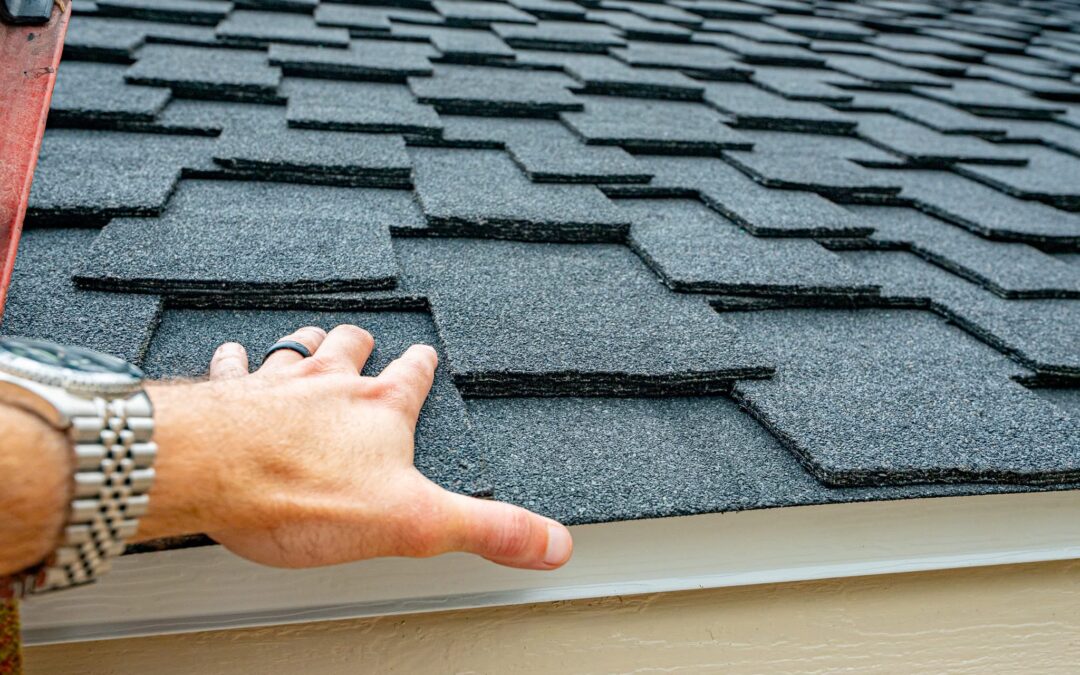
Standard 3-tab shingles are a single-layer asphalt strip with cutouts that create three tabs. They lie flatter and have less built-up thickness than architectural shingles, which is why they sit at the bottom of this list for hail country.
Most ordinary 3-tab products are not sold as UL 2218 Class 4 shingles. Owens Corning’s Supreme three-tab shingle, for example, is described as a basic, value-oriented product and does not list an impact class. A few specialty 3-tab products are made to meet Class 4 — CertainTeed’s XT 30 IR is one — but those are the exception. If a standard 3-tab roof in Dallas–Fort Worth is due for replacement, this is the moment to consider a more hail-resistant option, not necessarily the most expensive one on this page.
How to choose, without the pressure
You don’t have to start with a brand name. Start with an honest read of whether the roof you have needs a repair, more time, or a full replacement.
- Get a real inspection, not a guess from the driveway. A free, no-obligation roof inspection will tell you what’s actually going on.
- If the roof only needs a repair, do the repair. Don’t replace a roof that still has life in it just to get a Class 4 upgrade.
- If it is time to replace, ask your insurance agent — before you choose a product — whether a Class 4 roof qualifies for a premium credit on your policy and what paperwork they need. In Texas, the Texas Department of Insurance notes that Class 4 roof coverings receive the highest premium credit, but each company sets its own discount. No one can promise you a number except your agent.
- Make sure the quote names the exact product — Presidential Shake TL is not the same as Presidential Shake, and Duration is not the same as Duration FLEX or STORM — and includes the starter and hip-and-ridge pieces needed for the rating.
- If you’re dealing with storm damage, that’s a different path than a worn-out roof you already planned to replace. How a hail claim works in Texas is a separate question from which shingle to put back on.
When we replace a roof, we tear it down to the wood decking and put the new roof on from there. That’s the only way we install, and it matches what several Class 4 asphalt products require for their rating. Texas Direct Roofing & Construction offers free, no-obligation roof inspections across the Dallas–Fort Worth area. We’ll tell you plainly what we find, walk you through the options that fit, and leave the decision with you.
Schedule your free inspection or call (817) 775-3540.
Frequently Asked Questions
What does a Class 4 rating actually mean?
It means the roof covering passed the highest UL 2218 laboratory impact class: two hits from a 2-inch steel ball without tearing or cracking open. It does not mean the roof is hail-proof, or that it will look untouched after a real storm.
Will a Class 4 roof lower my insurance premium?
It might, but it is not automatic. The Texas Department of Insurance says a Class 4 roof covering receives the highest premium credit, and that each insurer sets its own discount and paperwork. Ask your agent what they need, which may include TDI Form PC068, before you install.
Are 3-tab shingles a bad idea in North Texas?
Standard 3-tab shingles are the least hail-resistant option in this comparison. A few specialty 3-tab products are made to a Class 4 rating, but those are the exception. For a new roof in hail country, most homeowners are better served by an architectural shingle or one of the Class 4 options above.
Enjoyed this post and want to find more like it? Check out Feedspot’s list of top Texas roofing blogs, where we were recently featured.