
Icestorm Roof Leaks Explained: Common Causes & Solutions After Winter Storms
Asking yourself, “Why is my roof leaking after an ice storm?”
The aftermath of a severe ice storm can leave a trail of white beauty as well as significant damage. While gorgeous, the immense weight and relentless grip of ice pose a silent threat to your home, often manifesting as horrible roof leaks. Understanding how these winter storms compromise your roof is the first step to protecting your property and your peace of mind. This guide will demystify the common causes of ice storm roof leaks and outline effective solutions for homeowners.
Understanding the Unique Danger of Icestorms
What counts as an Icestorm?
An icestorm is a meteorological event characterized primarily by freezing rain. Unlike a typical snow storm where precipitation falls as frozen flakes, an icestorm involves rain that freezes upon contact with surfaces below 32°F (0°C). This continuous accretion of ice creates heavy, slick coatings on everything, including your roof.
Why Your Roof Is Vulnerable After an Icestorm
The unique danger of an icestorm lies in the density and weight of the ice it creates. Freezing rain forms solid sheets of ice, drastically increasing the load on your roof structure. This weight, combined with the freezing and thawing cycle, can compromise even well-maintained roofing materials and lead to unexpected roof leaks. Unlike snow, which can be blown off by wind, ice adheres stubbornly, magnifying its destructive potential.
What This Guide Will Cover
This article will delve into the specific ways icestorms cause roof leaks, from the common culprit of ice dams to damage to shingles and flashing. We will guide you on identifying the signs of roof leaks, outline immediate protective actions, discuss professional solutions, and touch upon the role of homeowners insurance.
Decoding Icestorms: How They Lead to Roof Damage
What Exactly is an Icestorm?
An icestorm is a meteorological event characterized by freezing rain. Unlike a typical snow storm where precipitation falls as frozen flakes, an icestorm involves rain that freezes upon contact with surfaces below 32°F (0°C). This continuous accretion of ice creates heavy, slick coatings on everything, including your roof.
The Mechanics of Ice Formation on Your Roof
 The destructive melt-freeze cycle: Water from melting ice seeps into tiny cracks, then refreezes and expands, creating larger openings for future leaks.
During an icestorm, liquid precipitation falls and immediately solidifies upon hitting the cold surface of your roof. This process can happen rapidly, layering ice upon ice. When temperatures fluctuate, a melt-freeze cycle begins: warmer periods cause surface ice to melt, and subsequent colder periods refreeze this water, often in new or existing vulnerable areas. This constant cycle exacerbates small cracks and weaknesses.
The Immense Weight and Destructive Force of Ice Sheets
A thick layer of ice can weigh several pounds per square foot, potentially hundreds or even thousands of pounds on an entire roof. This immense weight can strain roofing materials, weaken structural components, and push water into areas it shouldn’t reach. The slick, hard surface of ice can also scrape away protective granules from shingles or lift seams on a metal roof.
The Freeze-Thaw Cycle: A Relentless Assault on Roofing Materials
The repetitive nature of the freeze-thaw cycle is a primary driver of roof leaks after an icestorm. Water seeps into tiny cracks or under shingles. When it freezes, it expands, widening the cracks. When it thaws, more water can enter. This relentless process can degrade roofing materials over time, creating pathways for water to reach the interior of your home and eventually the attic.
Common Causes of Icestorm Roof Leaks
Ice Dams: The Primary Culprit
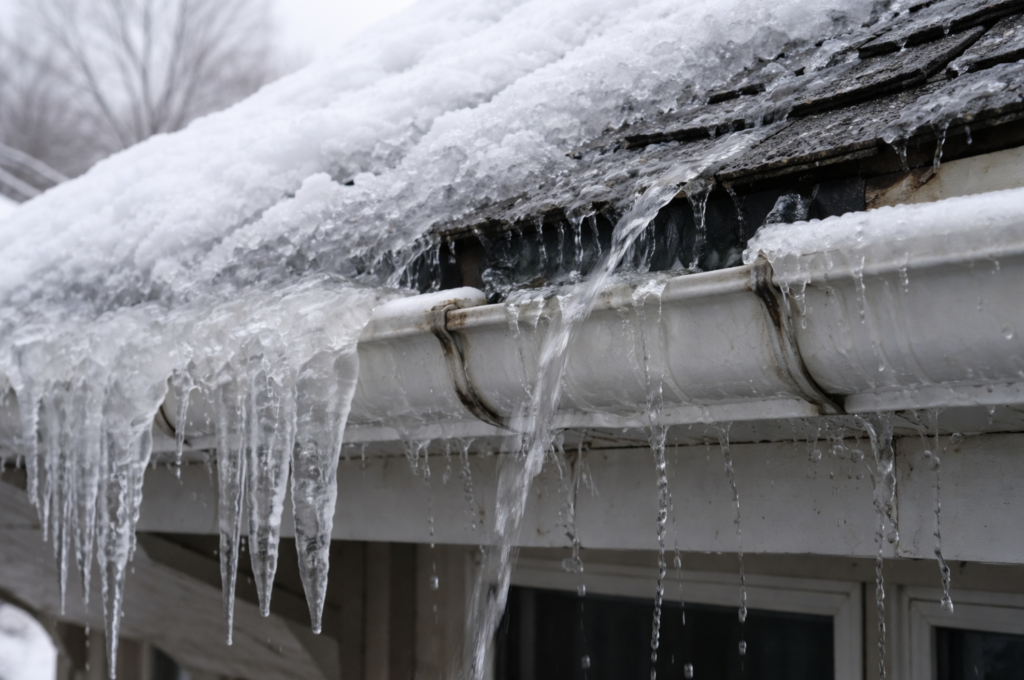
Ice dams form when heat escaping from your attic warms the roof surface, melting snow or ice. This meltwater then flows down the roof until it reaches the colder eaves, where it refreezes. This process creates a dam of ice. Water pooling behind the ice dam can then back up under shingles and find its way through the roof deck, leading to roof leaks.
Damaged or Compromised Flashing
Flashing is the critical material, often metal, used to seal joints and seams on your roof, particularly around penetrations like chimneys, vents, skylights, and along roof valleys. During an icestorm, ice accumulation can lift, crack, or displace flashing, creating direct entry points for water. Compromised flashing is a common cause of roof leaks that are often harder to spot from the ground.
Compromised Roofing Materials
The sheer weight and abrasive nature of ice can damage roofing materials directly. Shingles can crack, curl, or lose their protective granules, making them more susceptible to water penetration. For a metal roof, ice can exert significant pressure on seams and fasteners, potentially causing them to lift or separate.
Existing Roof Damage Exacerbated by Ice
Minor pre-existing issues, such as small cracks, loose shingles, or aging flashing, can become major leak points after an icestorm. The added pressure and moisture from ice and meltwater will exploit any existing weakness in the roof system, turning small problems into significant roof leaks.
Clogged Gutters and Downspouts
When gutters and downspouts are filled with snow, ice, and debris, they cannot effectively channel meltwater away from the roof and foundation. This blockage contributes to water pooling at the eaves, significantly increasing the likelihood of ice dams forming and exacerbating roof leaks.
Identifying Icestorm Roof Leaks: Signs to Look For Inside and Out
Interior Signs of Water Damage
The first indication of a roof leak may appear inside your home. Look for water stains on ceilings or walls, peeling paint, damp spots, or even drips. A musty odor can also signal hidden moisture. In severe cases, drywall may sag or show signs of mold growth.
Exterior Clues on the Roof and Eaves
Examine your roof from a safe distance. Unusually thick icicles hanging along the eaves, especially if they extend far from the edge, can indicate an ice dam. You might also see large ice formations along the roofline or a general heavy accumulation of ice on the roof itself. Damaged or missing shingles are also clear warning signs.
Attic Inspection: The Unseen Evidence
Your attic is a prime location to spot early signs of roof leaks. After an icestorm, carefully inspect the underside of your roof deck and rafters. Look for water stains, dark spots, mold, or visible trails of moisture. Saturated insulation is a significant indicator of a leak that has penetrated the roof.
Immediate Actions After an Icestorm: Protecting Your Home from Further Harm
Prioritize Safety: Power Outages and Falling Debris
After an icestorm, safety is paramount. Be aware of downed power lines and the risk of falling tree limbs or compromised structures. Avoid being outside if conditions are hazardous. If your power is out, limited lighting can make leak detection more challenging but also more dangerous.
Contain the Leak Indoors: Temporary Measures for Ceiling Leaks
If you’ve spotted an interior leak, place buckets or containers directly beneath the drip to catch water. If the ceiling is bulging, carefully puncture the center of the bulge with a small nail to allow water to drain in a controlled manner, preventing a larger ceiling collapse.
Documenting the Property Damage for Your Insurance Claim
Thoroughly document all visible damage. Take clear photos and videos of interior water stains, exterior ice formations, damaged shingles, flashing, and any signs of compromise in the attic. This documentation is crucial for your homeowners insurance claim.
Cautious Exterior Assessment (If Safe to Do So)
Only if it is absolutely safe to do so, and from the ground, observe your roof for obvious signs of damage. Look for large ice formations, missing shingles, or damage to flashing. Never venture onto an icy roof.
Why You Should Avoid DIY Ice Removal from Your Roof
Attempting to remove ice from your roof yourself is extremely dangerous. The slick surfaces, risk of falling, and potential for causing further damage to roofing materials make it a job best left to professionals. DIY removal can also void homeowners insurance policies.
Contacting Professionals Promptly
As soon as it is safe, contact a qualified roofing contractor or inspector. They have the expertise and equipment to safely assess roof damage, remove ice dams, and perform necessary repairs. Early intervention can prevent more extensive and costly damage.
Solutions for Icestorm Roof Leaks: Repair and Mitigation
Professional Ice Dam Removal
Professionals use specialized equipment like steamers or hot water systems to safely and effectively remove ice dams without damaging your roofing materials. This immediately relieves the pressure and allows trapped water to drain.
Targeted Roof Repair for Specific Damage
Once the ice is removed and the roof has had a chance to dry, a professional inspector or roofer will assess the damage. Repairs might involve replacing damaged shingles, repairing or replacing compromised flashing around chimneys or valleys, or sealing minor cracks in the roof deck. For extensive issues, a full roof replacement might be necessary.
Navigating Homeowners Insurance After an Icestorm
Understanding your homeowners insurance policy is vital. Most policies cover sudden and accidental damage from perils like icestorms. However, damage resulting from neglect or poor maintenance (e.g., unaddressed clogged gutters) may not be covered. Filing an insurance claim promptly with your documented evidence is essential. A professional inspector can help assess the damage and assist in the claims process.
Conclusion
Icestorms present a significant threat to your home, with roof leaks being a common and potentially damaging consequence. By understanding how ice dams, compromised flashing, damaged roofing materials, and clogged gutters contribute to these issues, homeowners can be better prepared. Recognizing the signs, taking immediate safety precautions, and knowing when to call a professional are crucial steps. Proactive maintenance, including ensuring proper attic insulation and ventilation, and regular roof inspections, can significantly mitigate the risk of ice storm damage and costly roof leaks, safeguarding your home against winter’s icy grip.