
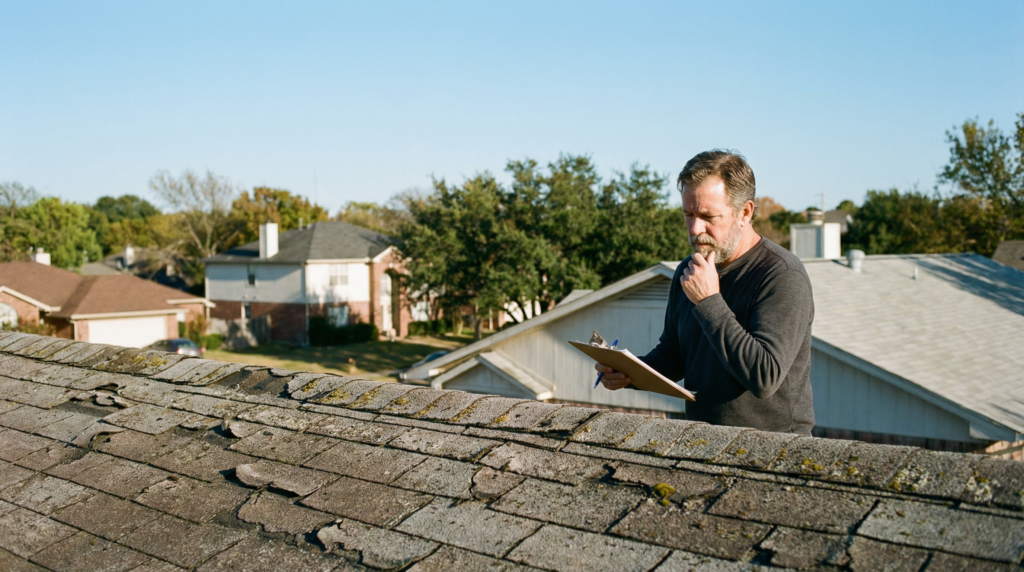
Introduction to Roof Lifespan in Dallas Fort Worth
Let’s state the obvious – roofs in the DFW metroplex endure harsh conditions, including scorching 100°F+ summer days, sudden hailstorms, and dramatic temperature swings. This climate doesn’t just age roofing materials; it accelerates their deterioration in ways homeowners in milder climates rarely experience.
Roof lifespan refers to the functional period a roofing system maintains its protective integrity before requiring full replacement. This isn’t simply about visible wear; it’s about the material’s ability to prevent water intrusion, withstand weather events, and maintain structural soundness. In practice, a roof’s effective lifespan ends when repair costs exceed replacement value or when persistent issues compromise your home’s protection.
The most common residential roofing material in Texas—asphalt shingle roofs—illustrates this geographic reality perfectly. While manufacturers often cite 20-30 year warranties, the asphalt shingle lifespan in DFW typically ranges from 15-25 years, with actual performance heavily influenced by specific weather exposure and installation quality. Premium impact-resistant shingles fare better, but even these face challenges unique to North Texas.
Understanding what actually determines how long your roof will last requires looking beyond manufacturer promises to the real-world conditions your home faces daily. Several critical factors converge to either extend or dramatically shorten your roof’s functional life.
Factors Affecting Roof Lifespan in DFW
Your roof’s lifespan in Dallas Fort Worth depends on far more than just the material you choose. The region’s punishing climate creates a perfect storm of conditions that can either accelerate deterioration or be managed through smart choices and consistent care.
Extreme Heat and Severe Weather Conditions
UV radiation and thermal cycling represent the primary enemies of roofing materials in North Texas. Summer temperatures consistently exceed 100°F, causing roofing materials to expand during the day and contract at night. This constant cycle weakens structural integrity over time, particularly for asphalt-based products. Metal roof vs asphaltbecomes a critical consideration here—metal roofing handles thermal expansion more gracefully than traditional shingles.
Hail damage poses another serious threat. The DFW metroplex sits squarely in hail alley, experiencing damaging storms that can shorten a roof’s life by years in a single afternoon. 8 million people are at risk of golf ball-sized hail that can crack asphalt shingle roofs, dent metal panels, and compromise protective granules that shield against UV rays.
Wind events, particularly during spring storm seasons, can lift and tear shingles, creating entry points for moisture that accelerate rot and decay.
Installation Quality and Maintenance Practices
Even the highest-quality materials fail prematurely when installed incorrectly. Poor ventilation traps heat in your attic, cooking shingles from below. We see that all the time in DFW. Click here for more on shingle granule loss.
Inadequate flashing around chimneys and vents creates leak pathways. Proper installation that follows manufacturer specifications can add 5-10 years to your roof’s functional life.
Regular maintenance proves equally critical. Annual inspections catch small problems before they become catastrophic failures. Clearing debris prevents moisture accumulation, while addressing minor damage stops progressive deterioration that compounds over seasons.
Comparison of Roofing Materials and Their Lifespan
Understanding your roof replacement timeline DFW starts with knowing what each material can realistically deliver in this challenging climate. Not all roofing materials handle the metroplex’s temperature swings and storm activity equally—and the differences can mean tens of thousands of dollars over your home’s lifetime.
Asphalt Shingles: The Affordable Workhorse
Traditional asphalt shingle roofs dominate DFW neighborhoods for good reason: they’re budget-friendly and readily available. In the Dallas Fort Worth area, expect 15–20 years max from standard three-tab asphalt shingle roofs. That’s notably shorter than the 20–25 year estimates you’ll see for cooler climates. The intense UV exposure and thermal cycling literally bake these shingles, causing granule loss and brittleness faster than in milder regions. According to Elevated Roofing, extreme heat accelerates deterioration significantly, making regular inspections essential for asphalt installations. We’ve seen some of these roofs require a full replacement after just a year or two, due to hail damage.
Architectural Shingles: Enhanced Durability
Architectural shingles (also called dimensional or laminate shingles) offer a meaningful upgrade. These thicker, multi-layered shingles typically last 20–30 years in DFW conditions. Their enhanced construction provides better wind resistance and impact tolerance—critical during spring hailstorms. While they cost 20–30% more than standard asphalt, the extended lifespan often justifies the investment for homeowners planning to stay put.
Metal Roofs: The Premium Long-Term Solution
Metal roofing stands out as the durability champion, with lifespans ranging from 40–70 years depending on the specific metal type. Standing seam steel and aluminum systems handle DFW’s climate exceptionally well—they reflect rather than absorb heat, resist hail damage when properly gauged, and won’t crack from thermal expansion. The upfront cost runs 2–3 times higher than asphalt, but the longevity and energy efficiency benefits create compelling long-term value.
Tile and Slate: Heritage Materials for the Long Haul
Tile and slate roofs can exceed 50 years in the Dallas Fort Worth region, with some lasting a century or more. These materials shrug off UV damage and temperature extremes. However, their substantial weight requires structural reinforcement for many homes, and installation costs reach premium levels. They’re most common on Mediterranean or Spanish-style architecture where their aesthetic matches the investment.
What matters most? Matching material choice to your budget, home style, and how long you plan to own the property—because the “best” roof depends entirely on your specific situation.
How to Maximize Your Roof’s Lifespan
Your roof doesn’t have to be replaced prematurely—strategic maintenance and smart decisions can push it well past the average lifespan, even in DFW’s punishing climate.
Regular Maintenance: The Foundation of Longevity
Schedule professional inspections twice annually, ideally in spring and fall before peak storm seasons. These checkups catch minor issues—lifted shingles, worn flashing, or debris accumulation—before they become catastrophic failures. After major hail events, immediate inspection is crucial. Clean gutters quarterly to prevent water backup that deteriorates roof edges and fascia boards. In practice, homeowners who maintain consistent inspection schedules see 20-30% longer roof lifespans compared to those who adopt a “wait and see” approach.
Storm Damage Prevention
DFW’s severe weather demands proactive defense. Trim tree branches within 6-10 feet of your roof to prevent impact damage during high winds. Consider upgrading to impact-resistant shingles, which not only extend lifespan but often qualify for insurance discounts. The lifespan of impact-resistant shingles typically exceeds standard materials by 5-10 years when properly maintained. Install proper ventilation systems—inadequate attic airflow creates moisture buildup and heat that accelerates deterioration from the inside out.
Quality Installation Matters
A premium material installed poorly fails faster than mid-grade material installed expertly. Verify contractors carry proper licensing, workers’ compensation insurance, and manufacturer certifications specific to your chosen material. Request detailed warranties covering both materials and workmanship—reputable installers confidently stand behind their work. These upfront investments pay dividends through extended roof life and reduced emergency repairs, setting you up perfectly to understand the true cost implications of your roofing decisions.
Cost Considerations for Roofing in DFW
The sticker shock of a roof replacement can be sobering, but understanding the cost-benefit equation changes everything when you’re planning for DFW’s demanding climate.
For a typical 2,000 square foot home in the Dallas-Fort Worth area, expect to invest anywhere from $8,000 to $25,000 for a complete roof replacement—a wide range that reflects the dramatic differences in material choice and installation complexity. Budget-friendly asphalt shingle roofs might clock in at the lower end, while premium architectural shingles, metal, or tile systems push costs significantly higher.
Here’s where roof durability in DFW becomes your financial ally: that initial price differential often pays for itself over the roof’s lifetime. A $12,000 asphalt roof lasting 15-20 years costs roughly $600-$800 annually, while a $22,000 metal roof spanning 40-50 years drops to just $440-$550 per year. The math gets even more compelling when you factor in energy savings from reflective metal roofing—potentially reducing cooling costs by 10-25% in Texas summers.
The long-term calculation shifts dramatically when you consider replacement cycles. Installing two asphalt roofs over 40 years (including inflation and disposal costs) can actually exceed the cost of one premium metal installation—while delivering half the peace of mind. For homeowners planning to stay in their property long-term, investing in materials engineered to withstand Texas’s extreme weather conditions transforms an expense into strategic asset protection.
Limitations and Considerations
Not every roof will hit the upper end of its expected lifespan, and understanding when to temper expectations saves you from disappointment and financial strain down the road.
When Shorter Lifespans Are Inevitable
Certain scenarios practically guarantee accelerated aging. Homes with inadequate attic ventilation can trap heat that literally cooks shingles from below, compounding Texas heat roof aging issues. Poor installation quality—rushed work, improper nailing patterns, or skipped underlayment—creates vulnerabilities that no amount of maintenance can overcome. Complex roof geometries with multiple valleys, dormers, and intersections accumulate debris and water more readily than simple gable designs, increasing failure points.
Properties under mature trees face a constant barrage of falling branches, leaf debris that holds moisture, and algae growth accelerated by shade. In these cases, expecting 15-18 years from composition shingles rather than 20-25 is realistic.
The Cost-Longevity Trade-Off
Premium materials promise extended lifespans but demand significantly higher upfront investment. A basic 3-tab shingle roof might cost $8,000 while architectural shingles run $12,000 and impact-resistant options push $15,000+. However, the math shifts when you factor in replacement frequency over 30 years.
Strategic repairs often beat premature replacement—a $2,500 valley rework on an otherwise sound 18-year-old roof buys you 5-7 more years, deferring a $14,000 replacement. This approach works best when damage is localized and the remaining roof shows minimal granule loss or curling.
Frequently Asked Questions About Roof Lifespan in DFW
How long do roofs last in DFW?
The typical DFW roof lasts 15-25 years, with asphalt shingle systems averaging on the lower end and premium materials pushing toward or beyond the upper range. According to Elevated Roofing, Texas’s climate accelerates aging compared to national averages—where a 30-year shingle might last three decades in cooler climates, it often delivers 18-22 years here. Metal and tile roofs extend that timeline significantly, sometimes reaching 40-50 years with proper maintenance.
What is the 25% roofing rule?
The 25% roofing rule states that if hail or wind damage affects more than 25% of a roof section (typically one slope or “plane”), insurance companies often require replacement of that entire section rather than patching individual shingles. This threshold exists because mismatched repairs create aesthetic inconsistencies and potential weatherproofing gaps. The rule protects homeowners from piecemeal fixes that compromise the roof’s integrity, though it can complicate claims when adjusters dispute the damage percentage.
Will insurance cover a 20-year-old roof in Texas?
Coverage becomes increasingly limited as roofs age past 15 years. Most Texas insurers shift from replacement cost value (RCV) to actual cash value (ACV) coverage once a roof hits 15-20 years, meaning they’ll deduct depreciation from any claim payout. Some carriers won’t insure homes with roofs over 20 years old at all, requiring replacement before issuing or renewing a policy. However, well-maintained roofs with documented inspection records sometimes qualify for better terms—another reason regular maintenance matters.
How often should you replace a roof?
Replacement timing depends on condition rather than a rigid schedule. A metal roof might not need replacement for 40+ years, while an asphalt system typically requires attention after 18-22 years in DFW’s climate. Watch for warning signs: widespread granule loss, curling shingles, recurring leaks, or daylight visible through the attic. Schedule professional inspections every 3-5 years after the 10-year mark to catch deterioration early. Proactive replacement before catastrophic failure costs less and prevents interior damage that multiplies total expenses.
Key Asphalt Shingle Roof Lifespan Takeaways
When homeowners ask “how long do roofs last in DFW,” the answer hinges on three interconnected factors: material selection, climate exposure, and maintenance commitment. Most roofing systems in the Dallas-Fort Worth area deliver 15-25 years of protection, with asphalt shingle roofs typically landing on the lower end and premium materials like metal or tile extending well beyond two decades.
However, the region’s notorious hailstorms, temperature swings, and UV intensity mean that lifespan expectations aren’t guarantees—they’re best-case scenarios that require active preservation. A roof is only as durable as the care it receives. Annual inspections, prompt repairs, and strategic upgrades like impact-resistant shingles can add years to your system’s service life while protecting your home equity.
When evaluating replacement options, balance upfront costs against long-term value. A slightly higher initial investment in quality materials and professional installation often delivers better protection and lower lifetime costs than budget-focused shortcuts. Your roof is a decades-long commitment—make it count.
Key Takeaways
- UV radiation and thermal cycling
- The sticker shock of a roof replacement can be sobering
- The long-term calculation shifts dramatically
- Not every roof will hit the upper end of its expected lifespan
- Expecting 15-18 years from composition shingles rather than 20-25 is realistic